
Migrant Citizen Science
Migrants and citizen science
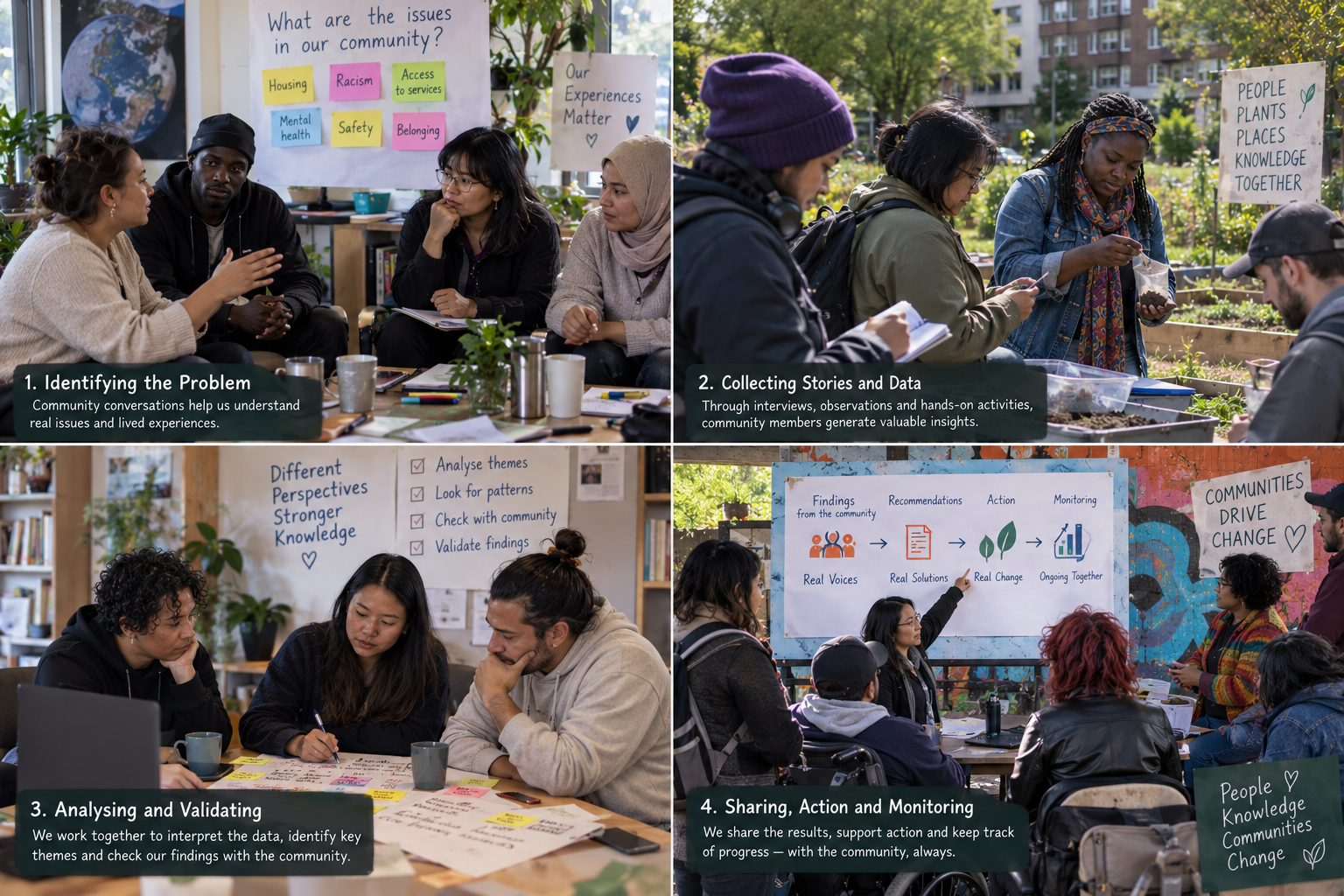
Citizen science involves members of the public in one or more parts of research. People may help ask questions, collect or analyze data, interpret findings, or share results. Some projects involve people throughout the process; others involve them at specific stages. MCSA focuses on making these opportunities meaningful and accessible to migrants, including migrant women and gender minorities, and on recognizing community knowledge alongside academic expertise.
Why the word "citizen" can exclude
The term "citizen science" can unintentionally create a sense of exclusion for people who are not citizens of the country where research takes place. For migrants, this can reinforce the perception that science is something they participate in only as observers rather than as contributors. MCSA therefore places particular emphasis on migrant participation in citizen science and on creating opportunities for migrants to contribute their knowledge, experiences, perspectives and skills to scientific activities.
Migrants bring experiences shaped by different cultural, social, geographical and educational contexts. These perspectives can broaden the questions researchers ask, strengthen understanding of issues affecting diverse communities, and contribute to the development of knowledge that reflects a wider range of experiences. Participation in citizen science can also provide opportunities for migrants to build connections with researchers, institutions and other members of society, supporting greater social interaction and inclusion.
Research that concerns the communities it involves
In Norway and across Europe, migrant participation can contribute to research and citizen science activities addressing issues such as environment and sustainability, health, education, social justice and community development. The involvement of migrants is particularly relevant when research concerns communities in which they live, work and participate, as their experiences can provide perspectives that may otherwise be overlooked.
MCSA promotes migrant involvement as part of its commitment to inclusive and equitable research practices. We believe that diversity in participation can strengthen the knowledge produced through citizen science and help ensure that different experiences and perspectives are considered in research and related decision-making.
Strengthening science, society and policy
MCSA's approach is grounded in a critical understanding of the Eurocentric, Western-centered and androcentric traditions that have shaped scientific knowledge and institutions. Opening citizen science to migrants — including migrant women and gender minorities, whose experiences and perspectives have often received limited recognition — is part of broadening whose knowledge is recognized and who can contribute to its production.
By supporting greater participation of migrants in citizen science, MCSA seeks to strengthen the relationship between science, society and policy. This can create opportunities for migrants to contribute to knowledge that affects their communities while also benefiting wider society. In this way, citizen science can become a space where different forms of knowledge and experience come together to address shared challenges and contribute to a more inclusive, equitable and just society.
Learn more about citizen science in Europe on the EU-Citizen.Science platform — a knowledge hub built with the most relevant citizen science actors in Europe, including more than 20 citizen science training modules.
Explore the ResearchContribute your knowledge and experience
You don't have to be a professional scientist to make a contribution to our collective knowledge.